
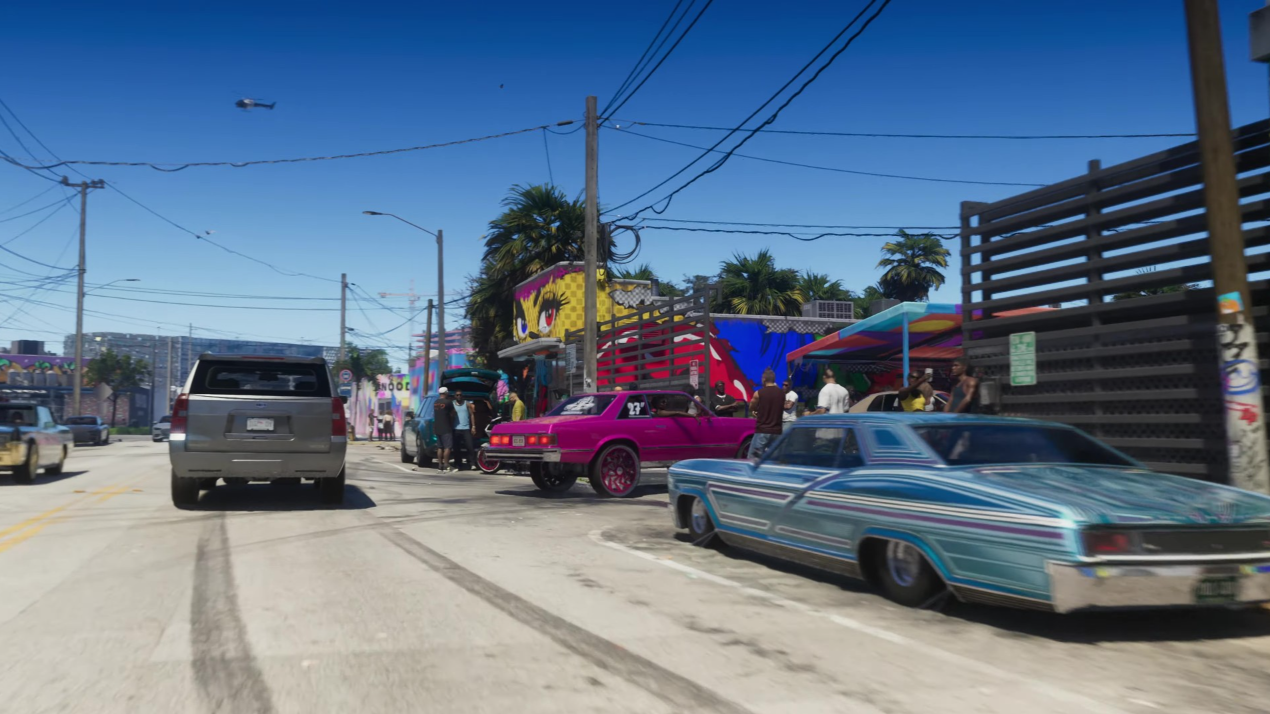
Another significant evolution in the GTA 6 mission structure is its relationship with the world around you. Rockstar Games appears poised to move beyond the scripted, marker-driven corridors of past entries and create a living sandbox where every mission breathes in tandem with Leonida’s sprawling ecosystem. Instead of treating the GTA 6 Items open world as mere backdrop, GTA 6 is expected to weave story objectives directly into its dynamic systems—weather, NPC routines, traffic patterns, wildlife, and even political undercurrents—so that player choices ripple outward in unpredictable ways.
This shift starts with environmental reactivity. Trailers hint at a fully simulated Florida-inspired state where hurricanes don’t just look impressive—they flood roads, strand vehicles, and alter mission routes on the fly. A bank heist planned for clear skies might turn chaotic when sudden storms scatter guards or force you to improvise an escape through rising floodwaters. Animals, once decorative, now interact with the world: alligators blocking swamp shortcuts, panthers spooking traffic during a high-speed chase, or flocks of birds drawing unwanted police attention. These elements stop being cosmetic and become tactical variables you must read in real time.
Missions themselves gain new layers of openness. Leaks and analyses suggest Rockstar is experimenting with multi-path objectives that let you approach jobs through stealth, brute force, social engineering, or pure opportunism—then live with the consequences. Disable CCTV during a setup mission and the finale might unfold quietly; miss a witness and the entire district goes on high alert days later. Side activities like fishing, courier runs, or underground robberies can bleed into the main campaign, supplying intel, cash, or even rival gang heat that alters story branches. Enterable buildings—motels, refineries, marinas—expand the playground further, turning every structure into a potential mission hub or hideout rather than a static prop.
The protagonists Lucia and Jason benefit most from this philosophy. Their Bonnie-and-Clyde partnership isn’t confined to cutscenes; it plays out across the map. A favor owed to one contact might unlock a new safehouse in another district, while ignoring street-level rumors could spark rival turf wars that complicate later heists. Random encounters—carjackings, street races, or even political rallies—can escalate into full mission chains or quietly influence your reputation with factions. The world no longer resets after a mission; it remembers, adapts, and reacts.
Compared to GTA 5’s relatively isolated story beats or Red Dead Redemption 2’s meticulous but still somewhat linear honor system, GTA 6 looks ready to deliver true simulation depth. Missions stop feeling like isolated set pieces and become chapters in an ongoing crime saga shaped by the city itself. Traffic AI, pedestrian routines, and economic systems all feed into a single, breathing simulation that rewards observation and improvisation.
The result is an open world that finally feels alive enough to cheap GTA VI Items matter. Every drive through Vice City, every back-alley deal, every midnight swamp run carries potential. GTA 6 isn’t just expanding the map—it’s expanding what it means to exist inside it. When the game launches, players won’t simply complete missions; they’ll inhabit a living criminal underworld that evolves with every decision. That deeper relationship between player, mission, and world could redefine the open-world genre for years to come.

 English