
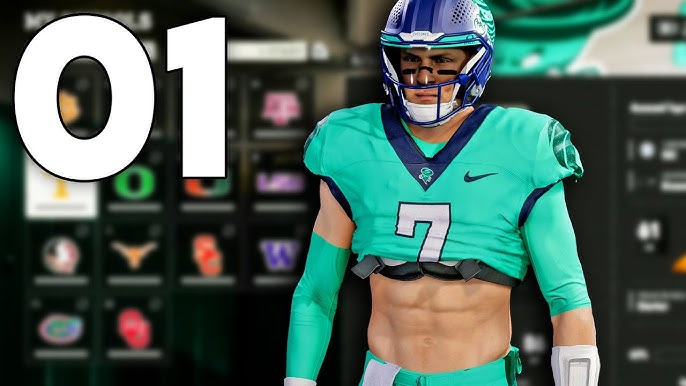
Max XP progression does push the experience slightly toward CUT 26 Coins an arcade-style fantasy, where superstar talent is more common. However, because every team benefits equally, the mode often feels more competitive rather than less realistic.
You’ll still need smart recruiting, strong coaching decisions, and on-field success to stay ahead—just in a world where the ceiling for greatness is finally reachable.
Why This Setting Is Worth Trying
If your dynasty saves feel stagnant or predictable, increasing XP sliders to 300 offers:
Greater player variety and development
More elite prospects and breakout stars
Tougher competition and draft decisions
A fresher, more exciting long-term experience
It’s a single adjustment that reshapes everything—from weekly gameplay to decade-long program building. A large number of cheap CUT 26 Coins can also be very helpful to you.
Final Thoughts
Sometimes the biggest improvements come from the simplest changes. By maximizing XP progression and speeding up coaching development, College Football 26 dynasty mode transforms into a faster-evolving, star-driven world filled with powerhouse programs and unforgettable players.
Whether you prefer realism, challenge, or pure excitement, this one setting tweak can breathe entirely new life into your next dynasty run—and make every season feel like must-watch college football.
Dynasty mode in College Football 26 is deeper than it looks on the surface. Beyond recruiting stars and play-calling, there are hidden systems, archetype quirks, and progression mechanics that can quietly make-or break-your program. After extensive Dynasty testing, these eight lesser-known tips can give you a massive long-term advantage if you know how to use them correctly. Having enough CUT 26 Coins can be very helpful.
Let's break them down.
Archetypes Matter More Than Star Ratings
Not all four-star recruits are created equal. In fact, some archetypes are outright punished when it comes to starting overall ratings. A prime example is the Gritty Possession Tight End.
Despite being four-star recruits, gritty possession tight ends routinely arrive on campus as 68-69 overall players, far lower than other archetypes at the same position. Meanwhile, four-star blocking tight ends regularly enter as 73-74 overall, a huge difference before development even begins.
What makes this worse is that gritty possession tight ends don't even develop exceptionally well to justify the lower starting point. While they have solid abilities and usable blocking attributes, their overall growth lags behind other archetypes. In some cases, three-star players can even arrive with higher overalls.
The takeaway: always evaluate archetype first, stars second.
You Can Change Archetypes on Day One
One of Dynasty's biggest hidden mechanics is the ability to change a player's archetype immediately upon arrival-sometimes without spending a single upgrade point.
If a position change option appears grayed out, it's usually due to your current playbook. Switching playbooks (for example, to a pistol-based offense) often unlocks position changes instantly.
This allows you to fix "broken" recruits. For example, moving a gritty possession tight end to running back and then back to tight end can convert him into a physical route-running tight end, instantly boosting his overall by five to six points and unlocking better abilities.
This trick works for many positions and is one of the best ways to optimize recruits early.
Athlete Dual-Threat QBs Are Archetype Gold
Athlete dual-threat quarterbacks are some of the most valuable recruits in the game-especially if they have a high playing time dealbreaker.
By scouting only athletes with strong playing-time grades, you can identify elite prospects with excellent speed, throw power, and accuracy. Even better, you can manipulate their archetype.
Move the athlete QB to running back, then switch him back to College Football 26 Coins quarterback. This often converts him into a pocket passer, which has far better abilities than the standard dual-threat archetype.

 اللغة العربية