
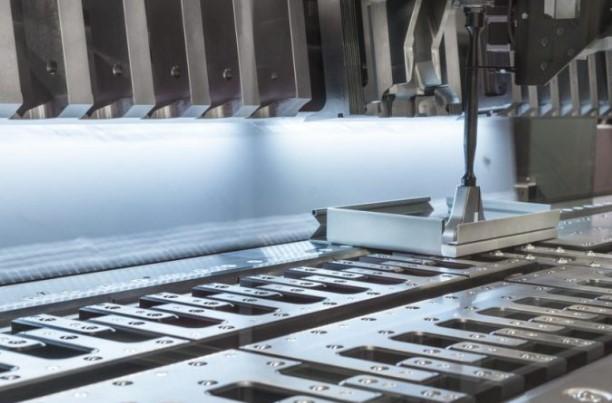
In high-volume manufacturing, Stamping Machining is valued for speed, repeatability, and the ability to produce complex shapes with consistent accuracy. Engineers rely on Stamping Machining when they need parts that combine structural strength with efficient production, especially in industries where timing, quality, and dimensional stability all matter.
Why Press-Formed Parts Matter
Press-formed parts have become essential in modern product development because they support both performance and cost control. When a component is shaped with the correct tooling and process planning, it can move smoothly from prototype to mass production without losing consistency. This matters in sectors where a small variation can affect assembly, durability, or final product behavior.
Another reason these parts are widely used is that they can be produced from a broad range of metals, including stainless steel, aluminum, and carbon steel. Each material brings its own balance of strength, weight, and corrosion resistance. A good forming strategy considers these factors early, so the finished part not only fits the design but also performs well under real operating conditions.
Material Choices and Structural Performance
The success of a formed part depends heavily on the material selected for the job. Stainless steel is often chosen for environments exposed to moisture or chemicals, while aluminum may be preferred when weight reduction is important. Carbon steel remains a practical option for applications that require strong mechanical performance at a reasonable cost.
Beyond the base metal, thickness, temper, and coating all influence how the component behaves during and after production. A thinner sheet may allow more complex shapes, but it can also require tighter process control to avoid deformation. On the other hand, a stronger alloy may improve service life but need more force during forming. Careful balance between these factors helps manufacturers deliver reliable results without unnecessary waste.
Modern Methods in Metal Forming
Today's fabrication shops use a combination of progressive dies, transfer systems, punching, bending, and finishing operations to build efficient workflows. These methods help reduce manual handling and support a smoother path from raw sheet to finished component. By automating key steps, manufacturers can improve throughput while keeping tolerances within a narrow range.
A well-designed forming line also makes it easier to scale production. Once tooling has been validated, repeated output can remain stable across large batches, which is essential for industries that require steady supply. Quality monitoring, fixture design, and tooling maintenance all play important roles in keeping the process predictable. When these elements work together, the result is cleaner geometry, better fit, and less rework.
HardwareODM in Tooling Strategy
One of the most important parts of successful production is not only the machine itself, but the way the tooling is designed and maintained. Tooling strategy affects part consistency, cycle time, and long-term cost. When the die is built correctly and supported by careful inspection, production becomes more reliable and easier to manage.
This is where a disciplined engineering approach can create real value. A project may begin with a simple drawing, but turning that concept into stable output requires attention to material behavior, edge quality, hole placement, and forming direction. A strong process plan reduces variation and helps ensure that each batch matches the intended specification.
Applications Across Industrial Sectors
Formed metal parts appear in a wide range of industries, from automotive and electronics to appliances, machinery, and telecommunications. Brackets, covers, housings, connectors, and structural supports all depend on accurate fabrication to function as intended. In automotive systems, for example, the part must often be light enough to support efficiency while still strong enough to withstand vibration and load.
Electronics applications may require compact parts with smooth edges and precise openings, while industrial machinery often needs heavier-duty pieces that can handle repeated stress. In every case, the manufacturing goal remains the same: produce reliable parts that support the final product without adding unnecessary complexity. That balance of form, function, and efficiency is what keeps metal forming relevant across so many markets.
From Development to Stable Output
Moving from sample parts to stable production requires a clear process for validation, testing, and revision. Early prototypes help confirm shape and fit, but true success comes when the same result can be repeated across hundreds or thousands of units. That means inspection systems, traceability, and documentation must all work together.
As production matures, companies often refine tooling, adjust cycle settings, and improve handling procedures to reduce variation. These changes support better consistency and lower overall manufacturing cost. For businesses seeking dependable industrial solutions and more information about production capabilities, visit https://www.hardwareodm.com/product .

 English