
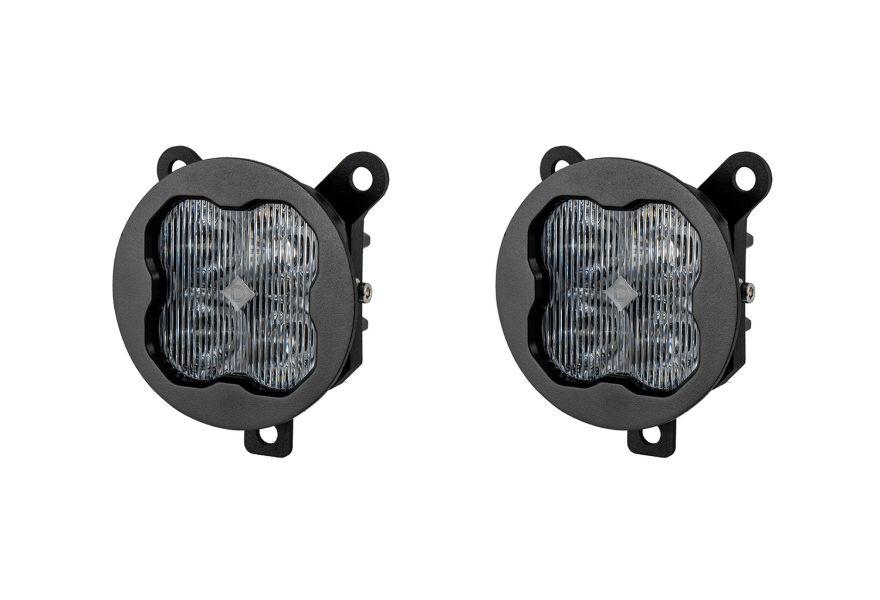
In the automotive lighting field, Fog Lights Mold design influences every stage of production, from surface finish to final assembly accuracy. A well-planned Fog Lights Mold helps manufacturers create stable, durable, and visually consistent components that perform reliably in demanding driving conditions. Rxmolds supports this process with tooling approaches that focus on precision, repeatability, and long-term manufacturing efficiency, allowing lighting parts to meet strict expectations for safety and appearance.
1. Why Fog Lamp Production Needs Careful Engineering
Fog lamps are built to improve visibility when weather conditions become difficult. Because they sit low on the vehicle and operate in harsh environments, their housings and lens parts must be carefully engineered. Small differences in thickness or shape can affect brightness, sealing, and installation. For that reason, manufacturers need tooling that delivers exact geometry every time.
The challenge is not simply making a part that looks correct. It must also fit properly with brackets, wiring paths, reflective surfaces, and protective covers. A dependable mold supports those requirements by maintaining tight tolerances and repeatable output. When production is scaled to thousands of units, this stability becomes a major advantage, reducing scrap and minimizing rework.
2. Materials That Strengthen Durability and Performance
Material selection is one of the most important decisions in lighting component production. The resin used for fog lamp housings must resist heat, vibration, moisture, and long-term exposure to road conditions. If the selected material is too fragile, the part may crack or deform. If it is not stable enough, the lamp may lose its shape and compromise assembly quality.
Tool steel also matters because it defines how well the mold performs during repeated use. A strong and wear-resistant mold structure helps preserve dimensional accuracy through long production runs. Polishing, coating, and thermal management can further improve performance by reducing friction and controlling surface quality. These choices help manufacturers create parts that are both reliable and efficient to produce.
3. Custom Lighting Development with Rxmolds Expertise
Custom automotive lighting often requires more than a standard production setup. Vehicle brands may request special styling, unique lens contours, or compact layouts that fit limited space. In those cases, tailored tooling becomes essential. A custom approach makes it possible to support distinctive designs while preserving manufacturing consistency and cycle efficiency.
This is especially useful when a project moves from prototype to mass production. Design teams need tooling that can adapt to functional requirements without forcing unnecessary compromises in appearance. Careful coordination between engineering and production teams helps achieve that balance. The result is a mold strategy that supports both creative design and practical factory output.
4. Digital Tools and Stable Manufacturing
Modern tooling development relies heavily on digital systems. CAD models help engineers evaluate geometry before machining begins, while simulation software can predict material flow, cooling behavior, and possible weak points. These tools reduce trial-and-error work and make development faster and more predictable.
Once the mold enters production, process control becomes equally important. Stable injection pressure, balanced cooling, and consistent cycle timing all contribute to part quality. Automation can help maintain those conditions and reduce variation caused by manual operation. With careful digital planning and disciplined production control, manufacturers can improve efficiency while keeping quality high.
5. Future Directions in Automotive Lighting Production
The future of automotive lighting manufacturing is moving toward smarter, cleaner, and more efficient systems. Companies are paying closer attention to energy use, waste reduction, and recyclable materials. This shift is not only environmentally responsible but also economically practical, because it can lower costs and reduce material loss.
Rapid prototyping is also changing how new lighting parts are developed. Faster test cycles allow designers to refine concepts earlier and reduce delays before full production. As vehicles continue to evolve, the demand for accurate and durable lighting tooling will continue to grow. Manufacturers that invest in advanced processes will be better prepared for new styling trends, tighter regulations, and higher customer expectations.
For teams looking into practical tooling solutions and product support, https://www.rxmolds.com/product/ offers a direct path to further exploration.

 English